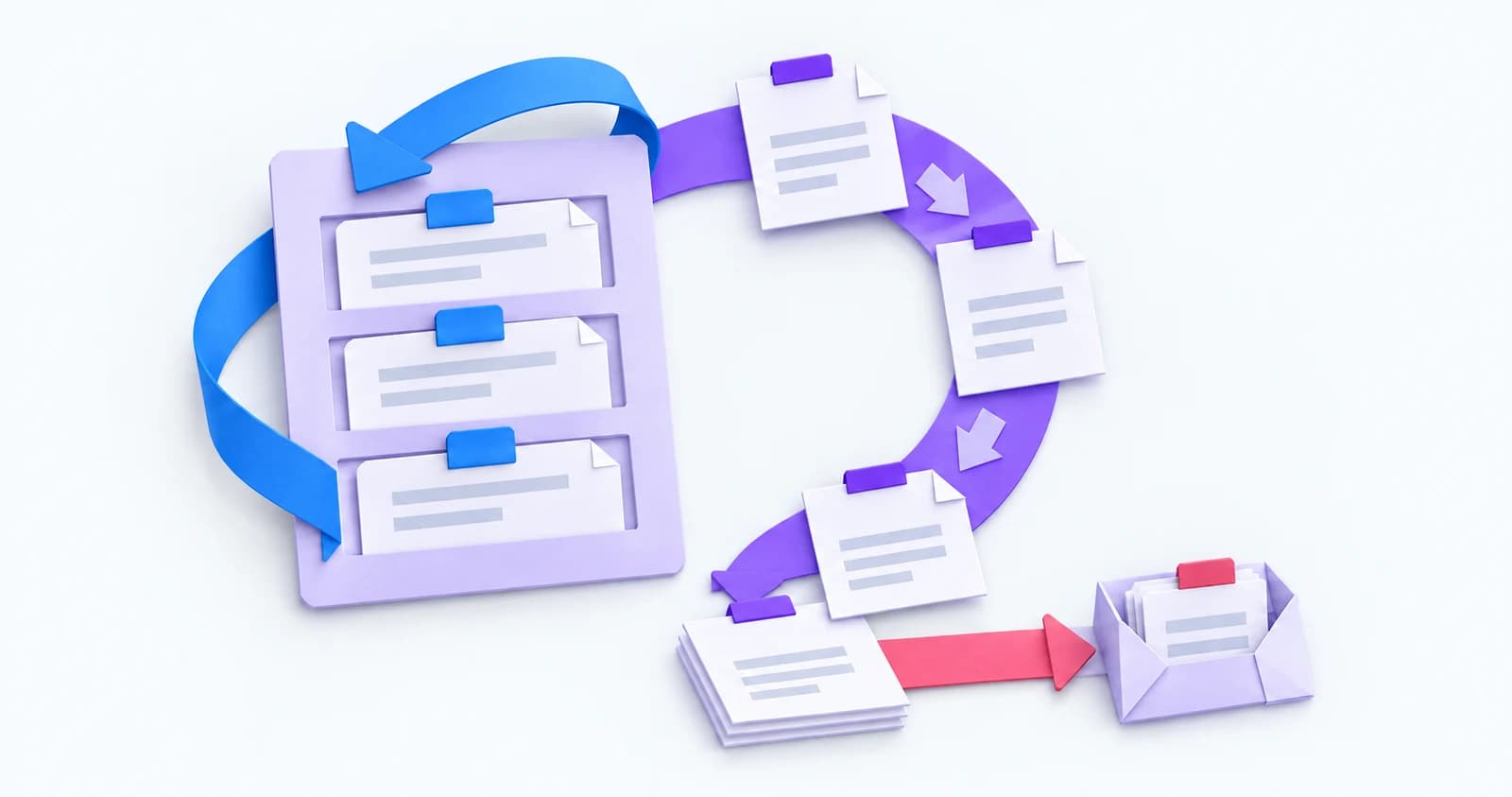
A candidate summary is ready. During the training period, your team checks it and feeds back corrections. Once that feedback is incorporated and you are confident, the agreed workflow runs automatically. Start your AI-adoption plan with that path.
Treat “AI-first” as a working approach: examine where software can help, then agree what people own. The useful question is what happens to the job, candidate or client record when the work finishes.
Choose a process and name its owner
Ask a consultant to describe a piece of work from beginning to end. Include where information arrives, what they check, what they update and who picks it up next.
Application registration and candidate availability are useful examples to discuss. Pick a process your team understands well enough to spot a mistake. Give someone responsibility for its rules, exceptions and review date.
Keep the first scope specific. A requirement such as preparing candidate information for a consultant to check gives the team something concrete to evaluate.
Decide which steps need rules, assistance or a person
A useful planning distinction is between repeatable rules, work that needs interpretation and decisions a colleague should make. Treat these as choices within a process, rather than a maturity score for the agency.
A reminder can follow an agreed condition. During training, check summaries against their sources and correct the brief. Decide which candidate and client decisions your process keeps with a consultant after the workflow is automated.
In Talisman, Talimate workflows can use triggers, saved searches, schedules and ordered actions. Define the conditions and check the exceptions as part of setting up the workflow.
Define training feedback and ongoing exceptions
Specify the records the system may read and the changes it may make. Name who reviews results during training and incorporates feedback. Agree when the team is confident enough to automate, and who handles the exceptions and business approvals that remain.
Ask to see a failed run as well as a completed one. Check where the problem appears, who receives it and how work resumes. Include a changed brief or incomplete record in the trial, using approved test data.
Talisman's AI agents work through defined tasks where configured. The command centre shows activity, results, costs and run history, with controls to stop and resume runs. Confirm the scope and permissions for your agency's setup.
Test what reaches the next team
Follow the result into the record people use. Ask the receiving colleague whether it contains what they need and whether they can trace it back to the source.
Where another system takes over, agree the exact point of transfer. Specify the fields, timing and owner. Test how a correction reaches that system as well as how the first submission gets there.
An agency's payroll, finance or website connection needs its own agreed requirements. Keep proposed connections separate from what has been demonstrated in the trial.
Review the work before expanding
Record the starting process, team effort and common corrections. During the trial, include checking time, failures and rework when comparing results. Ask the people doing the work what became easier and what became harder.
Use the findings to keep, adjust or pause the process. Train the next group on the same responsibilities before extending it. Set a review point for changes to the workflow, data or permissions.
For a task-level evaluation checklist, use our AI in recruitment guide. The aim is a process your team can explain, inspect and take responsibility for.